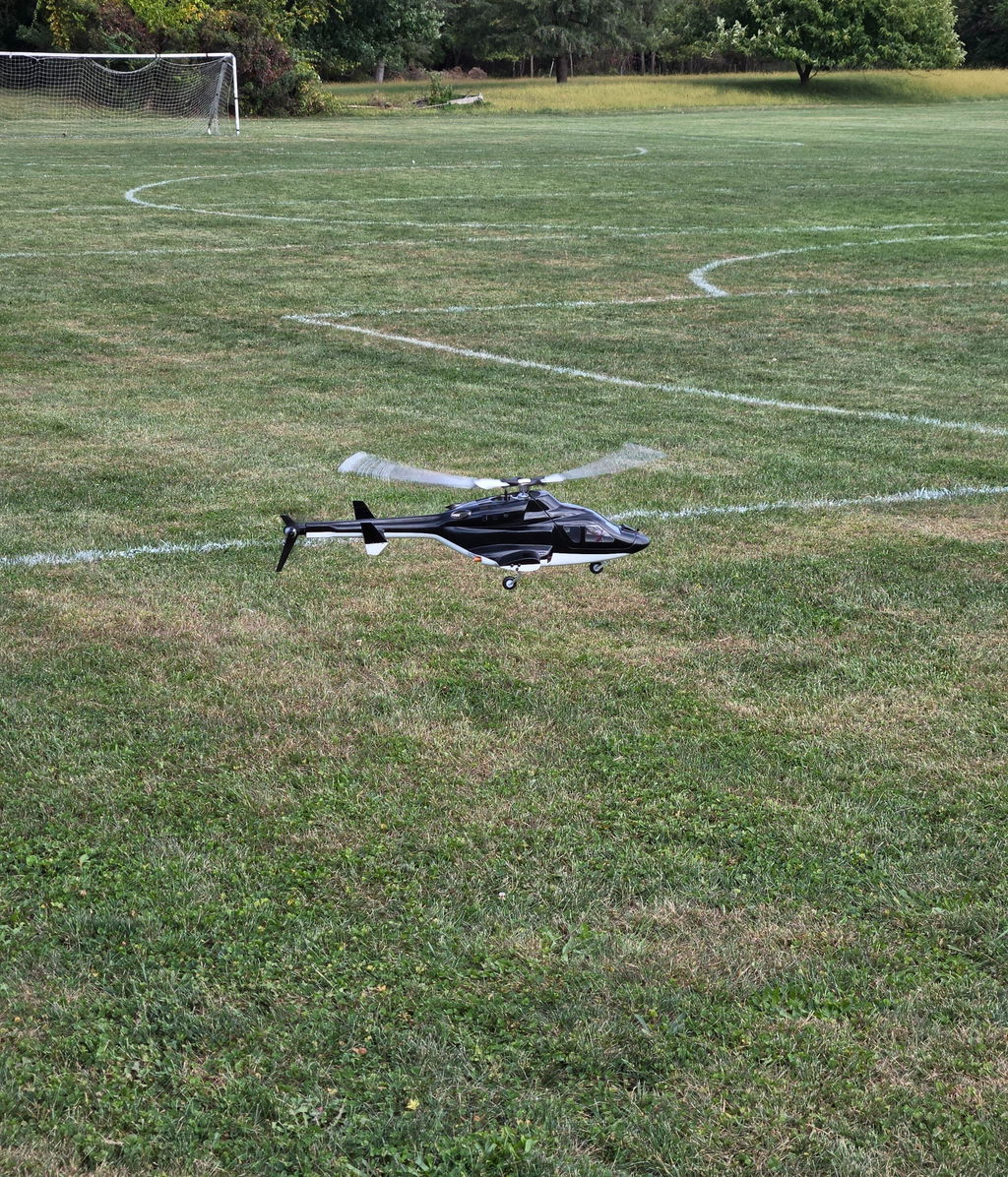
FLYWING Bell222 Big Airwolf GPS RC Helicopter 2.4G RC 6CH 470-Class Electric Airplane Model

정가
$899.99
판매가
$899.99
정가
매진
단가
Translation missing: ko.general.accessibility.unit_price_separator 

Fall Sale. Sitewide 10% OFF CODE:M2026.

Version: Old Version

Battery Quantity: with 1 Battery

- +

All U.S. Orders Tax-Free! | Easy Returns | Secure Payment | Free Shipping

3514087SK

Product details

Next-Gen 470-Class Scale Model

The gear comes up — and the Airwolf silhouette finally looks right in the air.

Tired of a hand-painted scale fuselage let down by skids hanging under it? The new 470-class FLY WING Bell 222 fixes the one thing that gives every scale helicopter away, with factory-fitted retractable landing gear and the ACE flight controller.

Retracts, factory-fitted Nothing to set up GPS hold + return-to-home Spare parts stocked

Gear up on climb-out, down on approach.

Key Highlights

01

The gear comes up

One switch on the transmitter and the landing gear folds away in flight. It runs straight off the flight controller — no extra channel, no servo to program, nothing to set up. The fuselage was redesigned around the mechanism rather than having a retract kit bolted underneath, so it arrives fitted and working.

02

Turns that actually bank

Coordinated turn is on by default. Rudder input brings matching aileron, scaled to airspeed — so circuits and figure-8s come out with a realistic bank angle instead of the flat pivot that rudder alone produces. No manual mixing, no hours of setup.

03

It holds its own position

Four-constellation positioning across GPS, BeiDou, GLONASS and Galileo holds it parked in mid-air, hands off the sticks. Lost orientation, low battery or a dropped signal — one key brings it home, and the return can be cancelled at any point to resume manual control.

04

20+ minutes of flying

A 3508 brushless motor and 4S 5000mAh pack, driven by a 60A all-metal ESC with 32-bit dual processors. Governor control holds rotor RPM steady from the first minute to the last, so it flies the same at the end of a pack as at the start.

The moment those wheels retract into the fuselage, the dream becomes real.

A scale helicopter is built to capture a specific icon. On the ground, fixed skids get the job done. But in the air — where the aircraft spends its entire flight being admired — they break the sleek lines and spoil the proportions you built the model for in the first place.

Retracts aren't just a technical detail. They are what turns a generic model into a true Bell 222 in flight, bringing that legendary silhouette off the screen and into the real sky.

The legacy

Proved by years of flight. Loved by first-time pilots.

The original FW450L built its reputation on one simple thing: making a complex scale helicopter easy and safe to fly. Thanks to intelligent GPS flight control, beginners didn't have to fight the sticks or fear an instant crash.

"[[ REAL OWNER QUOTE — verbatim, about GPS hold making it easy to fly ]]"

— Jame, RC Pilot 

It was almost the complete package — except for the fixed skids.

Check out the original flight and unboxing clips below to see why this machine was so widely praised, then see how the new version takes it to the next level.

Same silhouette. Same presence. Now the gear comes up. The legend continues — finally flying the way it always looked like it should.

A letter from the FLY WING design team

"It took us three years, but we finally got it right."

When we launched the original FW450L Airwolf in 2023, the feedback from scale pilots around the world was almost unanimous. The flight performance was there. But the question kept coming back: where are the retractable gears? Without them, it just isn't a real Airwolf.

Those words kept us up at night.

A reliable factory-fitted retract system is not a part you add to an existing helicopter. It needs bays inside the fuselage, an internal frame strong enough to take the landing loads, and a shell built around both. The original airframe was designed for fixed skids, and no amount of engineering was going to change that. It meant starting again — a new fuselage, moving up from the 450 airframe to a roomier 470-class, a power system sized for the extra mechanics, and the ACE flight controller to make scale banking effortless.

Today, in 2026, the wait is over.

The gear comes up — and the Airwolf silhouette finally looks right in the air. Thank you for your patience, your feedback, and your shared passion for true scale aviation. This one is built for you.

Lead EngineerFLY WING R&D Team

Or fly it from a cockpit

Collective in your left hand, cyclic in your right, pedals under your feet.

Two thumbs on a handheld transmitter is how almost everyone flies RC. It works, but it bears no relation to how a helicopter is actually flown. The H17 cockpit controller closes that gap: a collective pitch lever, a centre cyclic stick and foot rudder pedals, CNC-machined from aluminium alloy, with adjustable hydraulic dampers that load up the way real controls do.

Paired with the Bell 222, it becomes a seated aircraft flown on the same three controls a real pilot uses — collective to lift off, pedal to hold the nose straight, cyclic to bank through a turn. For an aircraft this size with this silhouette, it is about as close as the hobby gets.

The Bell 222 flown from the H17 cockpit.

17 CH
EdgeTX + ELRS

Open-source EdgeTX firmware with a built-in 250mW 2.4GHz ELRS module, plus a JR bay for external RF modules.

3 axes
Real control throws

Collective 0–20° pitch, cyclic ±15° full-direction, pedals ±30° yaw — all on hydraulic dampers.

15 min
Single-person setup

Folding base locks onto a square-tube camping chair. Type-C to a PC for simulator practice between flights.

View the H17 cockpit controller

Which one to order

In production

Upgrade Version with Retractable Landing Gear

The current model, and the one described on this page.

Discontinued

Old Version

Fixed gear, 2816 motor. No longer made — listed so existing owners can identify their airframe for parts.

Parts don't cross over. This isn't a facelift — the fuselage was redesigned around the retraction mechanism, so the two generations use different shells, frames, gear, motors and shafts. For help identifying an existing airframe, send a photo to service@stirlingkit.com.

What changed between the two versions

The short version: the gear now retracts, the airframe grew in every direction, and the power system was sized up to carry it — a 3508 motor in place of the 2816, on a 4S 5000mAh pack. The ACE flight controller adds two more satellite constellations, coordinated turn and three sensitivity modes, and drops the aerobatic and auto-route functions the previous controller offered. Both generations hold position on GPS and return home on their own.

Full specifications — both versions side by side
  Old Version Upgrade Version
Airframe
Class 450-class (FW450L) 470-class
Landing gear Fixed Remote-controlled retractable
Main blades Standard mounting Quick-release
Main rotor diameter 805mm 820mm
Main blade length (single) 360mm 370mm
Fuselage length (without blades) 700mm [[ confirm ]]
Fuselage height 195mm 230mm
Fuselage width 120mm 170mm
Tail rotor diameter 164mm [[ confirm — 125mm on the source sheet looks copied from the Bell-412 ]]
Weight, without battery 790g 1100g
Power system
Main motor 2816 brushless 3508 brushless
Tail drive motor 2008 brushless 2008 brushless
ESC 60A dual brushless 60A dual brushless, all-metal, 32-bit dual processor
Gearing Motor 13T / main 8T
Battery [[ old capacity ]] 4S 5000mAh
Flight time [[ old figure ]] 20+ minutes
Flight control
Flight controller Previous generation ACE
Satellite systems GPS / GLONASS GPS / BeiDou / GLONASS / Galileo
Hovering accuracy Horizontal ±1.5m, vertical ±0.5m [[ confirm ]]
GPS position hold Yes Yes
Return to home One-key, low battery, signal loss One-key, low battery, signal loss
Attitude mode Yes
Coordinated turn On by default
Sensitivity modes Soft / Standard / Sport
Takeoff & landing speed control Managed below 1m, proportional throttle above
3D manual & inverted flight Yes Not available on ACE
Auto routes (circle, figure-8) Yes Not available on ACE
Transmitter range Up to 1km, open and interference-free
Channels / stick mode 6CH 2.4GHz, Mode 1 / Mode 2 switchable
Weight & packaging
Product weight (complete set) 3000g 3900g
Product dimensions 70 × 12 × 19.5cm
Package dimensions 92 × 33 × 29cm 99 × 33 × 31.5cm
Package weight 4239g 5900g

Age 16+. Both versions: metal and electronic components, hand-painted one-piece shell.

Why 3D and auto-route modes are gone

ACE is built around positioning stability rather than aerobatics. When FLY WING moved the platform to ACE, 3D manual mode, one-key inverted flight and the semi-autonomous circle and figure-8 routes were discontinued across the entire range. This is a change of scope, not a fault with this model.

Coordinated turn took their place. Rather than the aircraft flying a preset path on its own, the controller adds aileron scaled to airspeed on every rudder input — turning circuits and figure-8s into something flown cleanly by hand. For pilots who want to do the flying, this is the better arrangement. For anyone specifically after automated routes or inverted capability, this generation doesn't offer them.

What's in the box

Standard RTF version

  • 1 × FLY WING Bell 222 helicopter — assembled, retractable gear fitted, ACE flight controller pre-calibrated
  • 1 × Hand-painted one-piece scale shell
  • 1 × 2.4GHz 6CH transmitter — Mode 1 / Mode 2 switchable
  • 1 × 4S 5000mAh flight battery

One battery is one 20+ minute flight. Most owners add a second or third pack so an afternoon at the field isn't over after a single flight. [[ LINK: spare battery listing ]]

[[ CONFIRM: is a charger included? If not, say so plainly here and link one — this is the single most common cause of "my order arrived incomplete" emails. ]]

Before you order

Do I need to register this with the FAA?

In the US, yes. This helicopter is 1100g without a battery, well over the FAA's 250g threshold, so it has to be registered before you fly it outdoors. Registration is $5, takes about five minutes on FAADroneZone, and covers you for three years — you get one number that goes on every aircraft you own, not one per model.

You'll also need to pass TRUST, the FAA's recreational safety test. It's free, online, takes around 20 minutes, and you keep the certificate with you when you fly. Remote ID applies too: either fly at an FAA-recognised club site (FRIA), or fit a broadcast module, which is an inexpensive add-on part.

None of this is difficult — it's the same paperwork every owner of a helicopter this size goes through. Outside the US, check your national aviation authority, as thresholds and rules differ.

Do I need to buy anything else to fly it?

No — the standard RTF version arrives with the transmitter and one 4S 5000mAh battery, so it flies as delivered. [[ CONFIRM AND STATE: whether a charger is included. If it isn't, say so plainly here and link one. ]]

The one thing worth adding is more batteries. One pack is a single 20+ minute flight; two or three turns a trip to the field into a proper session. [[ LINK: spare battery listing ]]

US buyers also need FAA registration and TRUST before flying — see below.

How long does shipping take, and who pays import duty?

[[ Your real dispatch time, carrier, and transit estimate by region. ]]

[[ Duty and tax policy — state clearly whether the customer pays on delivery or it's covered at checkout. US buyers in particular will assume the worst if this isn't answered. ]]

[[ Note on lithium battery shipping if it affects the carrier, route or transit time. ]]

What if something arrives damaged, or breaks?

[[ Your warranty terms and DOA policy in one clear sentence. ]]

Beyond that, spares for this airframe are stocked separately — blades, rotor head components, gear, shells and electronics — so a hard landing is a repair rather than a write-off. [[ LINK: spare parts collection ]] Send photos of the damage to service@stirlingkit.com and we'll tell you which parts you need rather than making you guess.

How much space do I need to fly it?

More than a back garden. The rotor spans 820mm and the aircraft moves quickly once it's out of a hover, so you want an open field, a park with clear sightlines, or a club site — well away from people, buildings, roads and trees.

This is not an indoor or small-yard helicopter, and it isn't one you learn on in a confined space. If you don't have somewhere open to fly, that's worth sorting out before you order.

Can I fly this if I've never flown a helicopter?

Yes, with sensible expectations. In GPS mode on Soft sensitivity it holds its own position, so a first hover is genuinely achievable on day one — the aircraft isn't fighting you the way an unassisted machine of this size would.

What it won't forgive is a bad site or a rushed first flight. Most first-time owners spend their first few packs hovering and flying slow circuits before touching Standard mode.

Is this the Airwolf helicopter?

It's the Bell 222 — the real-world aircraft that Airwolf made famous. This is a FLY WING scale model of that airframe, not an officially licensed product, so it ships in the factory scheme rather than the show's markings.

The shape, proportions and 470-class size are what make it read as Airwolf on the flight line. Plenty of owners repaint or apply their own decals from there.

Can it fly inverted, or fly automatic circle and figure-8 routes?

No. One-key inverted flight, 3D manual mode and the semi-autonomous route functions were discontinued when FLY WING moved to the ACE flight controller, across the whole range. ACE is built for positioning stability instead.

Coordinated turn takes their place: feed in rudder and the controller adds matching aileron for your airspeed, so you fly clean circuits and figure-8s by hand with a proper bank angle. If automated routes or inverted capability are what you want, this isn't the right aircraft.

I own the Old Version. Can I just buy the retractable gear and fit it?

No, and we don't sell it as a retrofit for that reason. The retraction mechanism isn't a bolt-on part — the fuselage structure itself was redesigned around it. The bays, the internal mounting frame and the shell geometry are all different on this generation, so there's nothing on the original airframe for the gear to mount to.

If retractable gear is what you're after, it means this aircraft, not a conversion of the one you have.

Mode 1 or Mode 2?

Switchable on the transmitter, so it doesn't matter which you order — set it to whichever you fly.

What should I check before each flight?

The same pre-flight every experienced pilot runs, and it takes about a minute. Check the main rotor grip spindle screws, the tail rotor grip screws, and every ball link and screw on the airframe. Anything that has worked loose gets thread-locked and retightened before you power up — vibration finds loose hardware, so this is worth doing every session rather than every few.

On the field, give yourself room and keep the aircraft well away from people. A 470-class helicopter carries real energy in the blades, so treat it as the machine it is rather than a toy. Damaged parts, unfamiliar setups and hurried first flights are where things go wrong — take your time on both and it looks after you.

Fly the dream, complete with retracts.

Bring home the 470-class Airwolf Bell 222 with full retractable gear. Simply choose the Retractable Landing Gear version above to get started.

Choose your version

Customer Reviews

Based on 15 reviews
100%
(15)
0%
(0)
0%
(0)
0%
(0)
0%
(0)
M
Mark Dressel
Airwolf V3 with ACE

I absolutely love my Airwolf heli. The ACE flight controller and the newly configured stick positions on the radio are a huge improvement. The introduction of "Soft", "Normal" and "Sport" are also great new features. I highly recommend this RTF heli kit.

J
JCD
1st flight

Very good product and very simple to use

L
Lucas M
Flight Modes are a Huge Plus

It has a variety of flight modes that really help fine-tune the flying experience. Whether you want a more stable hover or a more aggressive flight, the various settings allow you to adjust it to your skill level and preferences. It's great to have this level of control that makes flying more personalized.

M
Mercy C
Stunning Design with Impressive Details

The Airwolf styling is spot-on, with every detail looking professional and scale. The build quality feels premium, and I love how it catches the eye when its in the air. Definitely one of the best-looking helicopters Ive ever owned.

M
Mike R
Eye-Catching Design, But Could Be More Customizable

I love the look of the FW450L, which features a detailed Airwolf design. It's styling is very similar to the original and is definitely eye-catching. That being said, I wish there were more customization options. While the design is great, it would be even better to swap out some parts to make it truly unique. Still, the overall look is great.

Reviews in Other Languages