


FS-L200GC Gasoline vs. FS-L200AC Nitro: What's the Difference?
Same 7cc twin-cylinder engine platform. Two different ways to fuel and ignite it.
The FS-L200 is now available in two versions. The original FS-L200AC runs on 20–25% nitro model fuel, while the new FS-L200GC is designed for gasoline operation with CDI spark ignition.
If you have been looking at the FS-L200 and are wondering which version makes more sense for you, the important thing to know is that these are not two completely different engines. Both use the same compact 7cc inline twin-cylinder, four-stroke layout, with SOHC valve operation, dual timing belts, air cooling and electric starting.
The main differences are the fuel, ignition system, spark or glow plug, carburetor and the equipment needed to run the engine.
Gasoline or Nitro: The Main Difference
The easiest way to understand the two versions is to start with what goes into the fuel tank.
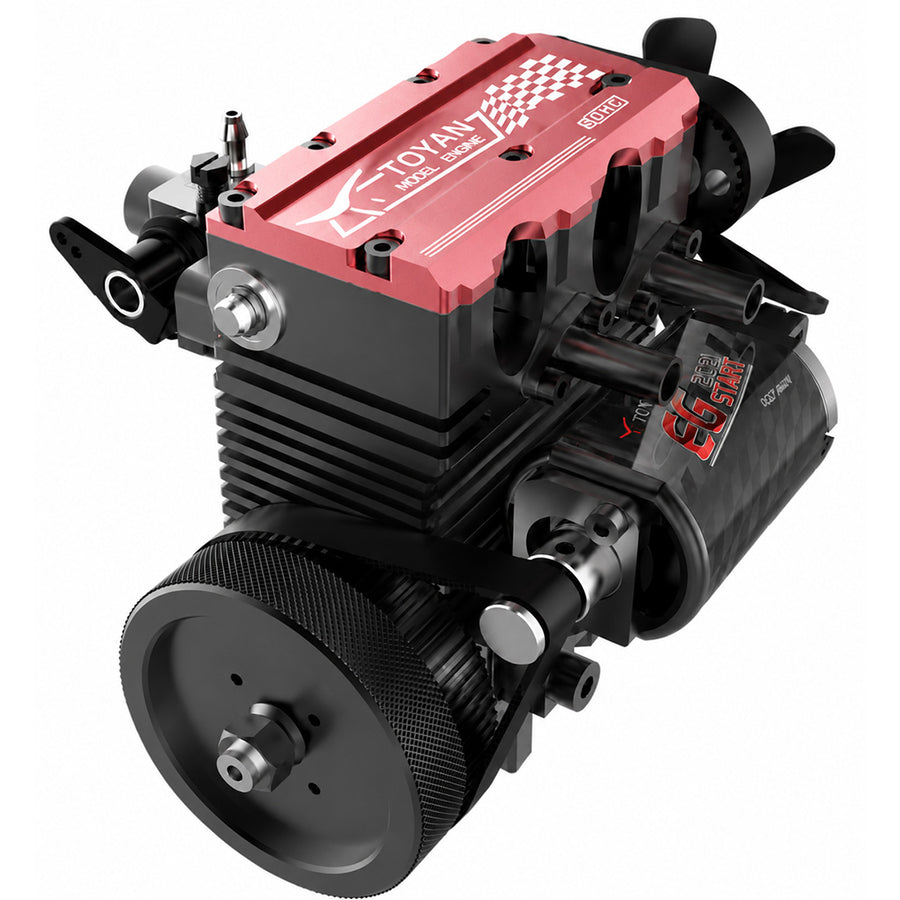
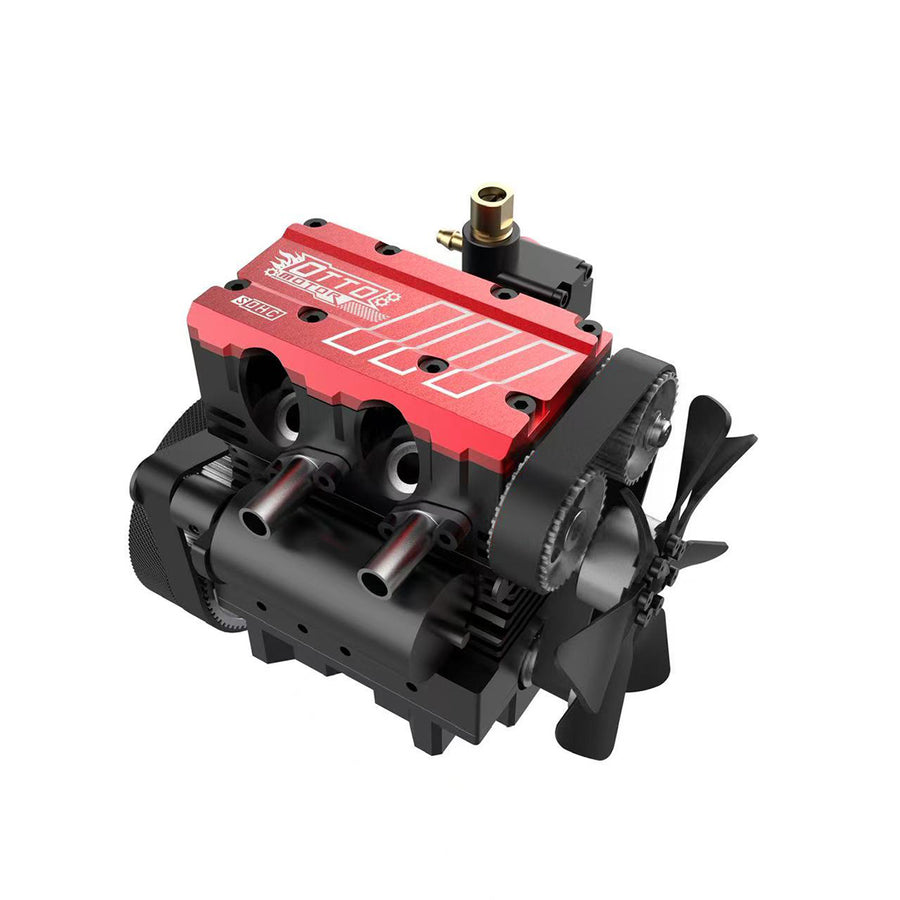
| Feature | FS-L200GC Gasoline |
FS-L200AC Nitro |
|---|---|---|
| Fuel | RON 92 / 95 gasoline (approx. 87–91 AKI in the US) | 20–25% nitro model fuel |
| Ignition | CDI high-voltage pulse ignition | Glow-plug ignition |
| Plug | 1/4-32 ME-8 spark plug | F-type four-stroke glow plug |
| Starting battery | 6–12V 2S–3S lithium battery | 7.4V 2S Li battery |
| Carburetor | Gasoline-specific design | Signal carburetor |
| Electric starting | Yes | Yes |
Important: The gasoline version uses mixed-oil lubrication. Do not run it on straight gasoline. Follow the recommended fuel and oil mixture in the instruction manual.
1. Gasoline vs. Nitro Fuel
Use gasoline instead of model-engine nitro fuel
The FS-L200GC is designed for RON 92 / 95 gasoline — roughly 87 to 91 AKI at a US pump. For builders who already have access to gasoline but do not regularly keep nitro fuel on hand, this provides a different way to run the engine.
The fuel system still uses mixed-oil lubrication, so gasoline is not used by itself. The recommended mixture should be followed according to the manual.
The original FS-L200 fuel setup
The FS-L200AC uses 20–25% nitro model fuel. This is the familiar setup for hobbyists who already work with glow engines and have the appropriate fuel and starting equipment.
2. Spark Ignition vs. Glow Ignition
This is the biggest mechanical difference between the two versions.
CDI + Hall-based ignition + spark plug
The gasoline version uses a CDI high-voltage pulse ignition system and a 1/4-32 ME-8 spark plug. The ignition system is designed around the magnetic signal from the engine and provides the spark needed to ignite the gasoline mixture.
Glow plug ignition
The nitro version uses an F-type four-stroke glow plug and the corresponding ignition equipment. The glow-plug system is a familiar approach for small nitro model engines.
In simple terms, the two engines use different ignition methods because they are designed around different fuels.
3. The Carburetor Is Different
The gasoline and nitro versions also use different carburetor setups.
The FS-L200GC uses a gasoline-specific carburetor design, while the FS-L200AC uses the signal carburetor used with the nitro setup.
The gasoline version's carburetor was redesigned with a side throttle rocker and top fuel inlet. These changes are part of adapting the FS-L200 platform for gasoline operation.
4. What Stays the Same?
Despite the differences above, a lot of the FS-L200 remains familiar.
- 7.0cc displacement
- Inline twin-cylinder layout
- Four-stroke operation
- SOHC valve train
- 16.6mm bore
- 17.0mm stroke
- 4,000–16,000 rpm
- 0.6 PS power rating
- Air cooling
- Mixed-oil lubrication
- Electric starting
- Compact CNC metal construction
So if you have already built or studied the FS-L200AC, the gasoline version is not a completely new engine to learn. The core engine architecture and mechanical concept remain familiar.
5. What Comes in the Starter Kit
Neither version ships ready to run. Both need a starter kit, and the two kits are not interchangeable — the gasoline kit supplies spark ignition components, the nitro kit supplies glow ignition components. Order the one that matches your engine.
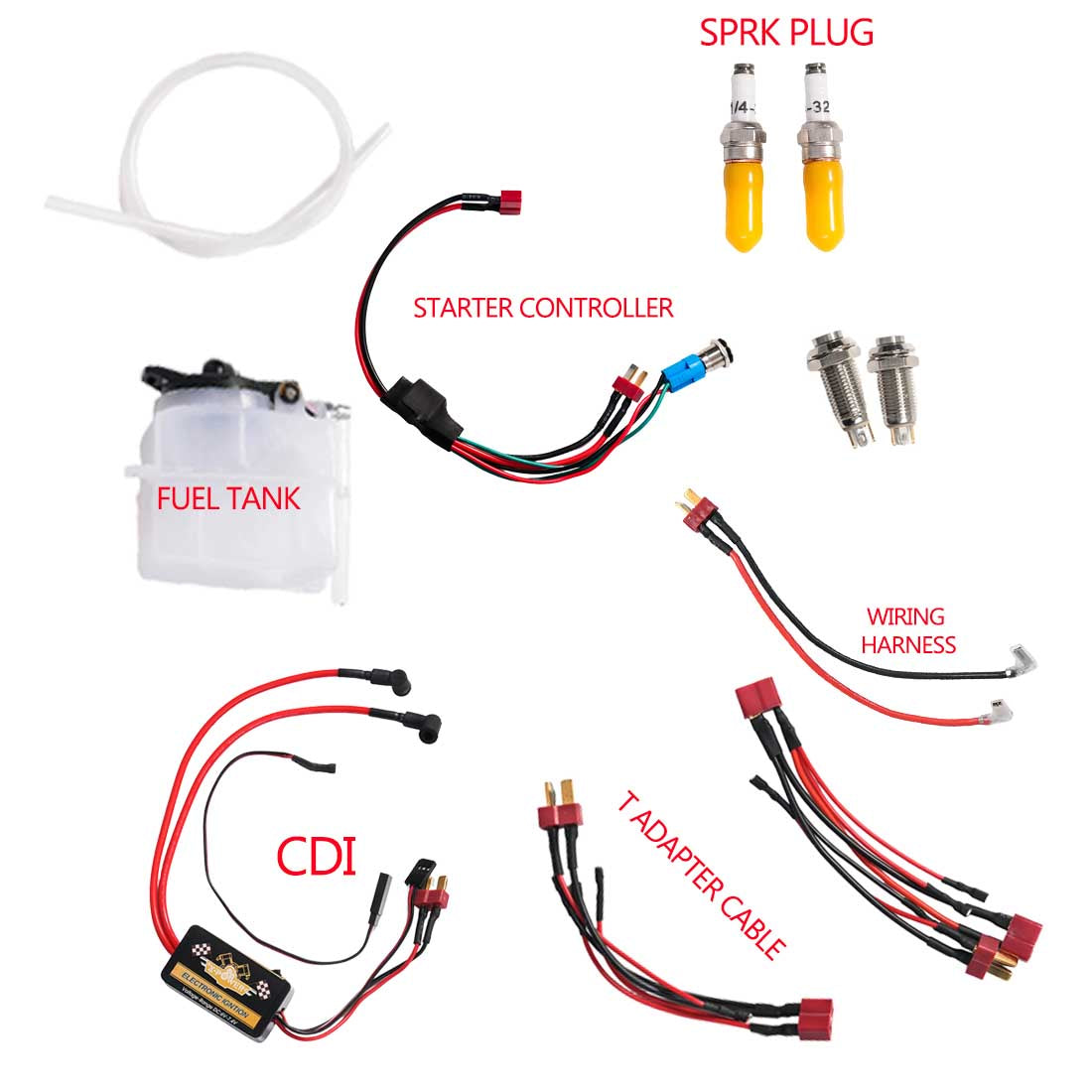
FS-L200GC Gasoline Starter Kit
- Spark Plugs × 2
- CDI × 1
- Hall Sensor × 1
- Start Switch Harness × 1
- Multi-Branch Harness × 1
- T-Adapter Cable × 1
- Fuel Tank × 1
- Fuel Tube × 1
- Switches × 2
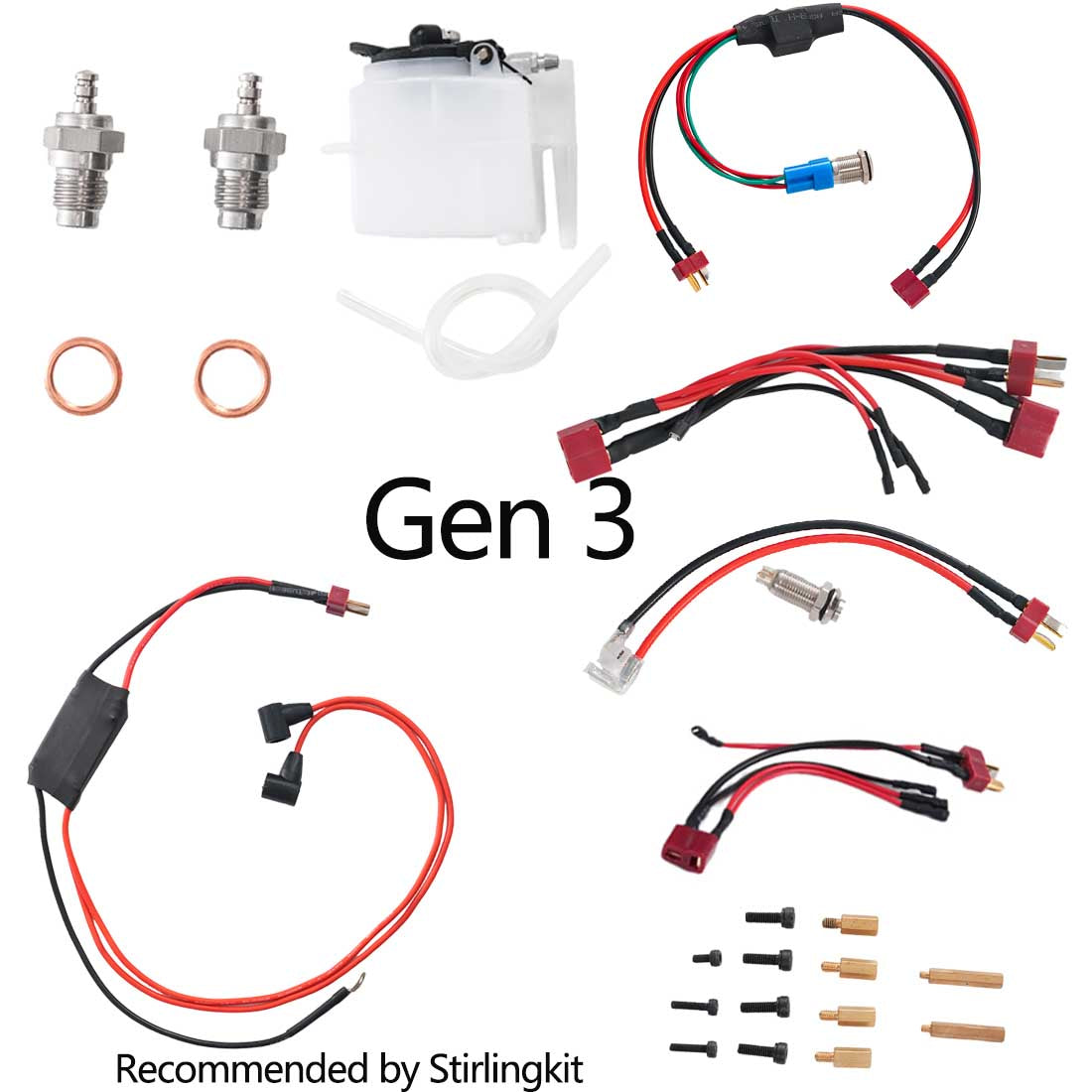
FS-L200AC Nitro Starter Kit
- Glow Plugs × 2
- Ignition Harness × 1
- Start Switch Harness × 1
- Multi-Way Splitter Harnesses × 2
- T-Adapter Cable × 1
- Fuel Tank × 1
- Fuel Line × 1
Both kits include the fuel tank and fuel line, so that is one thing you do not need to source separately. Beyond the starter kit you will still need a lithium battery and charger, a mounting base, fuel, and lubricating oil for the fuel mixture.
Both versions of the starter kit are sold on the same product page — choose Gasoline or Nitro / Methanol under Fuel Type, and select the Gen 3 version, which is the current one. Spare parts, tools and upgrades for both engines are in the ST-NF2 parts collection.
One detail worth knowing if you are comparing the two lists: the gasoline starter kit contains the CDI unit and Hall sensor but no flywheel, because the FS-L200GC engine already comes with the magnetic-signal flywheel fitted.
Gasoline vs. Nitro: Which One Should You Choose?
Choose FS-L200GC if...
- You prefer gasoline-powered model engines.
- You want to use RON 92 / 95 pump gasoline.
- You prefer spark ignition with a CDI system.
- You do not already have nitro fuel and glow-engine equipment.
- You are buying your first FS-L200 and want to start with the gasoline version.
Choose FS-L200AC if...
- You already use nitro model engines.
- You already have 20–25% nitro fuel available.
- You already have glow plugs and related starting equipment.
- You prefer the original FS-L200 nitro setup.
- You enjoy the traditional glow-engine experience.
There is no single "better" version for everyone. The right choice depends mainly on which fuel and ignition system you prefer to work with.
What About the Custom Cam Cover Colors?
The FS-L200 is not only about the way it runs. For builders who also care about how the finished engine looks on the bench, custom finishes are available.
The standard FS-L200GC has a black body with a red cam cover, redesigned to carry new artwork and the brand logo. If you would like something different, three further cam cover finishes are offered:
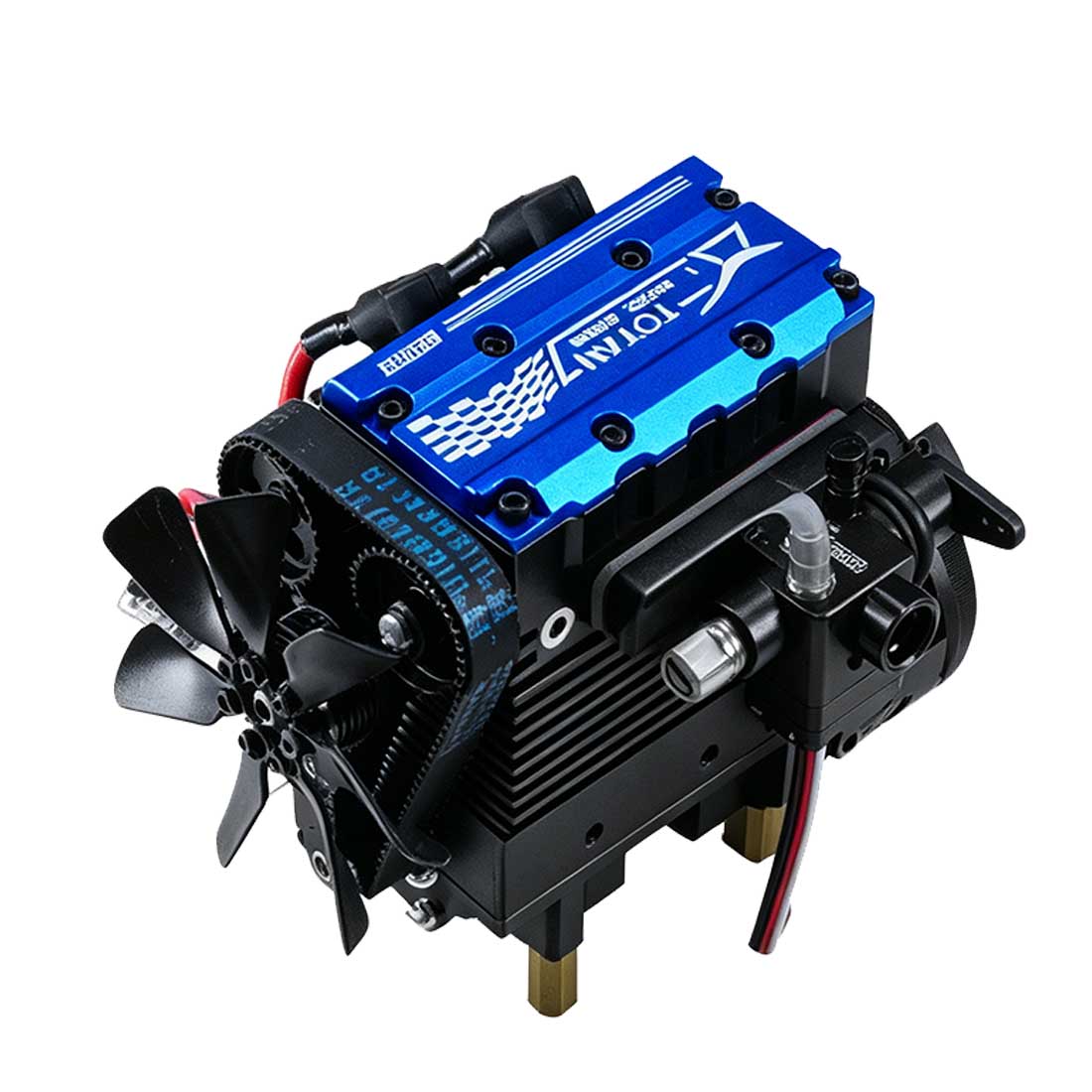
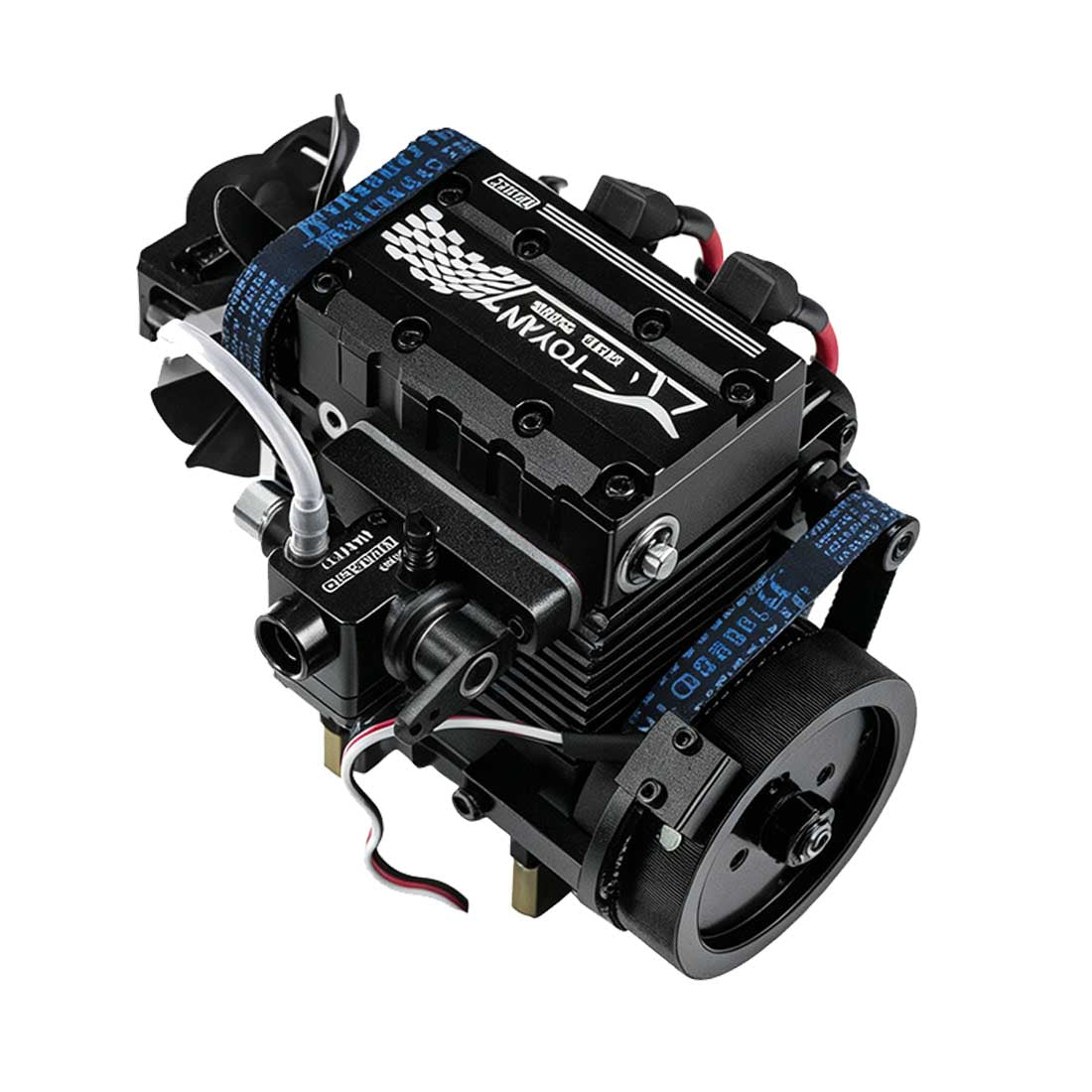
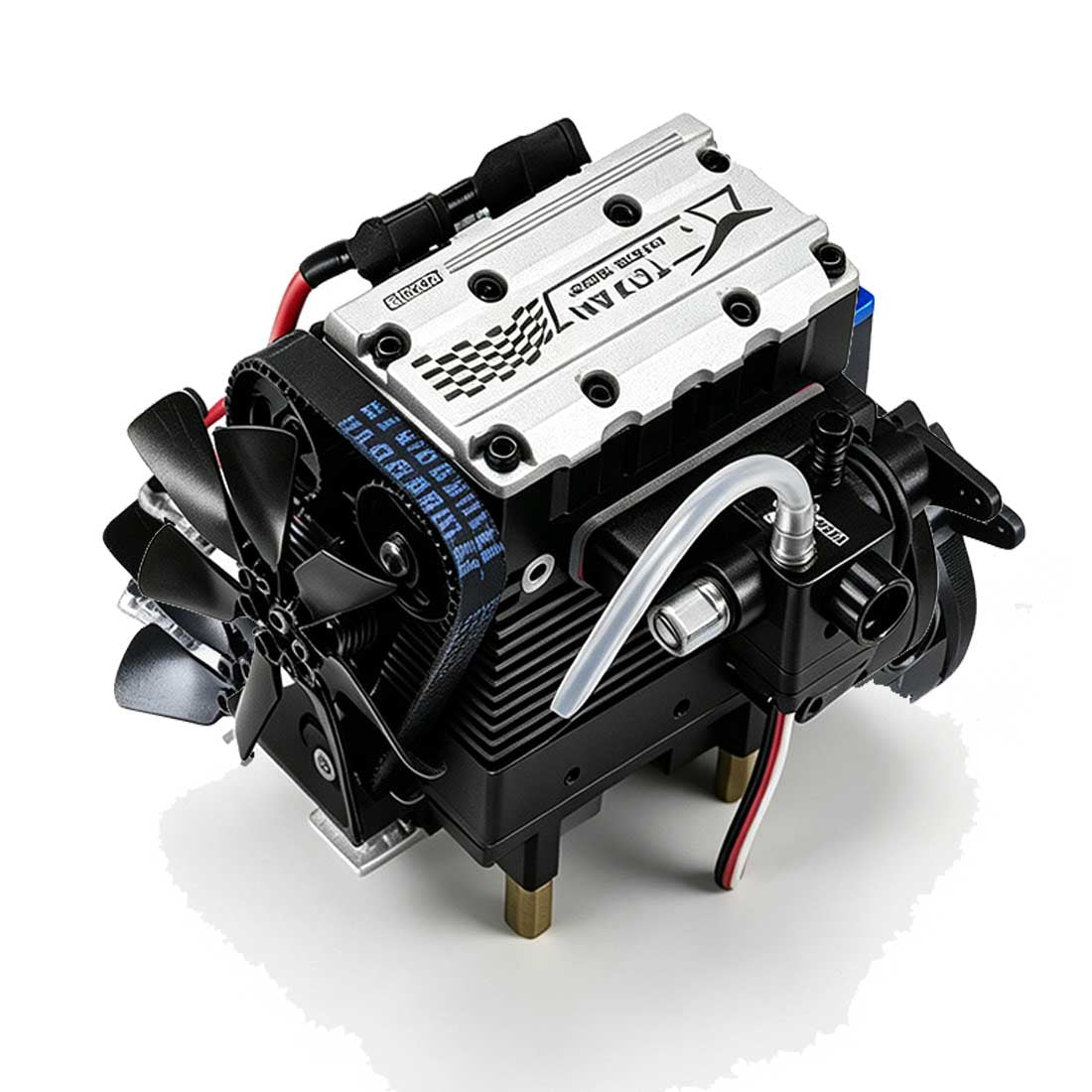
Each finish is priced on the product page, so you can simply select the one you want and check out — there is no need to contact us first or wait for a quote. The colour applies to the cam cover only: the engine body is black on every version, and red is simply the standard cover. Choosing black gives you an all-black engine. The custom colours do not change the engine configuration in any way. They are simply another way to give your FS-L200 a look that fits your workshop, display cabinet or collection.
One Engine Platform. Two Ways to Run It.
The new FS-L200GC gives builders another option without changing what makes the FS-L200 interesting in the first place: a compact, functional twin-cylinder four-stroke engine that you assemble yourself and can watch operate on the bench.
If gasoline is the fuel you would rather work with, the GC gives you that option. If you already have experience with nitro engines and prefer the original glow-plug setup, the FS-L200AC remains available.
Whichever version you choose, the attraction is the same: you build the engine, learn how the mechanisms work, and then see the crankshaft, timing system, valves and cooling fan move together as a real miniature internal combustion engine.
Ready to choose your FS-L200?
Compare the two versions and select the fuel system that fits your build.


0 kommentarer